
Journalist: Dylan Davis (OSU)
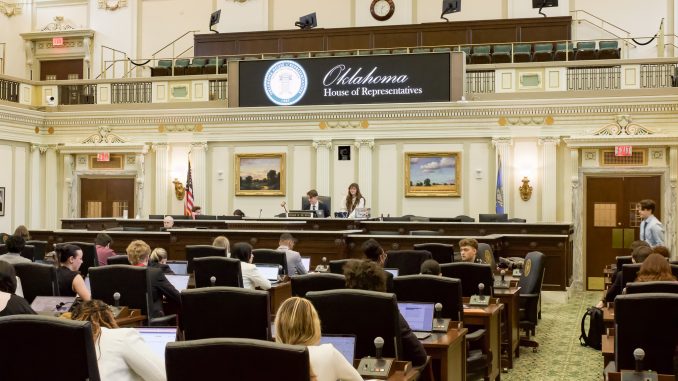
On Friday, Rep. Aiden Hearn (SE) introduced the “College Sports Eligibility
Requirements Act” to the OIL House of Representatives. This bill would make Division One,
Two and Three collegiate athletes over 23-years-years-old ineligible for NCAA athletics at their
respective universities. This bill ignores the current state of collegiate athletics nationwide and
invites economic downturn for communities across Oklahoma.
One reason this bill may be problematic is its lack of reliable enforcement. The bill says
that “The NCAA shall enforce these laws.” One problem with this plan, even for those who
support the bill’s intentions, is that the NCAA has failed to defend its positions in the courts over
the past decade.
Examples of this include, but are not limited to, the NCAA being forced to give up its position on
amateur players (The House v. NCAA), the NCAA losing its ability to restrict eligibility to athletes
(Martinson v. NCAA) and the NCAA losing its ability to regulate athletes’ commercial usage of their
image (O’Bannon v. NCAA). Because of strong recent historical precedent, the bill fails to provide a
reliable means of enforcing its own rules.
Beyond the problems with enforcing this bill, it may also harm athletic programs,
communities and the state as a whole economically. Restricting players older than 23-years-old
to play collegiate sports would inevitably force athletic talent away from Oklahoma universities.
A decline in the number of talented, experienced athletes on a team logically leads to a decrease
in team performance. Decreased team performance may reduce demand for the product these
players provide: entertainment. Decreased demand for the product would likely be followed by
less consumption of said product. Less consumption of the product, such as decreased attendance
at games and more, has the potential to cause businesses in college towns across the state that
rely on large turnouts for gamedays to suffer due to decreased crowds to sell their own products
and services to.
While the intent of the “College Sports Eligibility Requirements Act” is certainly earnest
and good, the outcomes are, at best, unclear; at worst, the outcomes could hurt athletes and
communities throughout Oklahoma through a dangerous game of athletic “brain drain.” For this
reason, this bill may benefit from being revisited and revised to become more effective and
beneficial to the people of Oklahoma.