
Journalist: Luna Ghimire (ECU)
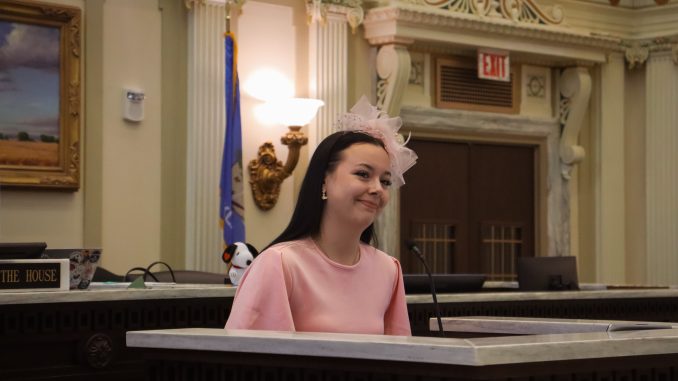
During Saturday’s session at the Oklahoma Intercollegiate Legislature, Rep. Shae Bellamy presented a bill aimed at reducing impaired driving and strengthening public safety across the state. Her proposal, the Impaired Driving Prevention and Alcohol Accountability Act, was successfully passed after discussion on its impact and enforcement.
Bellamy’s focus throughout her presentation remained on prevention rather than punishment. She highlighted the seriousness of drunk driving by referencing national statistics, noting that about 34 people in the United States die every day in drunk driving crashes, which is roughly one person every 42 minutes. She also pointed out that in 2023 alone, 12,429 people died in alcohol-related traffic incidents, with a significant portion of victims including children.
“This bill protects people on the roads by requiring certain DUI offenders to obtain an alcohol-restricted driver’s license,” Bellamy said during her presentation.
The bill introduces a system where repeat or high-risk DUI offenders are issued a restricted license that prevents them from purchasing alcohol. These licenses would be marked in a way that allows businesses such as liquor stores, bars and restaurants to identify individuals who are prohibited from alcohol purchases. The restriction lasts for a set period depending on the severity and frequency of offenses.
Bellamy emphasized that the bill is specifically designed to target repeat offenders rather than the general public. She explained that approximately one-third of DUI arrests involve repeat offenders, making them a key focus for prevention efforts. In Oklahoma, she noted, impaired driving accounts for about 25% of all traffic fatalities, further supporting the need for stronger intervention.
Rather than relying solely on incarceration, Bellamy framed the bill as a way to create accountability outside of the justice system while still allowing individuals to continue their daily responsibilities, such as driving for work or school.
Her approach reflected a balance between enforcement and practicality, showing an understanding of how policy can reduce harm while still considering real-life situations. By focusing on prevention and accountability, Bellamy’s proposal aims to reduce repeat offenses and improve safety on Oklahoma roads.
With the bill’s passage, Bellamy demonstrated how student legislators can address real-world issues through thoughtful and targeted solutions.