
Journalist: Jasmine Hornek (ORU)
Every year, Oklahoma braces for spring with a familiar sense of trepidation—waiting for the oncoming storm: tornado season. Beginning in March and lasting through May, this period produces the vast majority of the state’s annual tornado activity.
According to the Oklahoma Department of Environmental Quality, Oklahoma has averaged about 54 tornadoes per year since 1950. Even more striking, nearly three-quarters of these tornadoes occur during the peak months of April, May, and June.
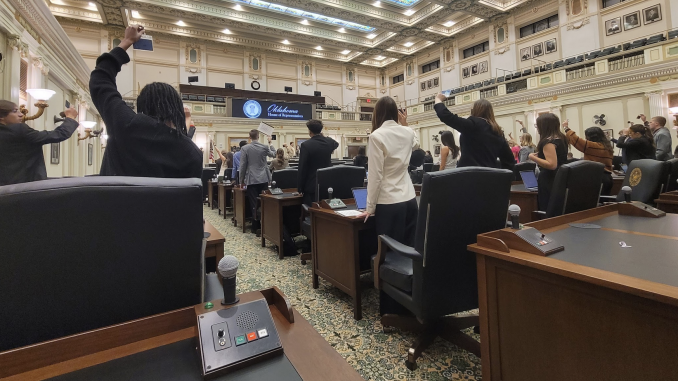
In light of this persistent threat, mock lawmakers in the Oklahoma Intercollegiate Legislature are considering proactive measures to protect residents before disaster strikes. Representative Hansen of the Southeastern delegation has introduced the No Oklahoman Left Outside Act. This bill would require every newly constructed home in the state to include a certified storm shelter or safe room.
These storm shelters would have to meet the strict safety standards set by the International Code Council (ICC) and the National Storm Shelter Association (NSSA). These shelters, sometimes referred to as “safe rooms,” must be explicitly designed to withstand tornadoes, hurricanes, and extreme wind events defined under ICC 500 standards.
If passed, the law would take effect on January 1, 2030, giving builders, developers, and city planning offices nearly five years to adapt. Compliance would be enforced through local county and city code enforcement—similar to how plumbing, electrical, and fire codes are monitored today. Builders who violate the regulations would face penalties under existing state and local construction laws.
While the bill focuses narrowly on new construction rather than retrofitting existing homes, its long-term impact could be significant. Over time, more and more Oklahoma households would have built-in protection from some of the state’s most dangerous natural disasters. Moreover, as the threat of severe weather continues to rise, so does the urgency of ensuring no Oklahoman is left without shelter.
The No Oklahoman Left Outside Act reflects a growing legislative conversation within OIL: how can the state increase public safety not only through emergency response, but through prevention? If adopted, this bill would mark a significant shift in how Oklahomans prepare for—and survive—the storms ahead very year, Oklahoma braces for spring with a familiar sense of trepidation—waiting for the oncoming storm: tornado season. Beginning in March and lasting through May, this period produces the vast majority of the state’s annual tornado activity.
According to the Oklahoma Department of Environmental Quality, Oklahoma has averaged about 54 tornadoes per year since 1950. Even more striking, nearly three-quarters of these tornadoes occur during the peak months of April, May, and June.
In light of this persistent threat, mock lawmakers in the Oklahoma Intercollegiate Legislature are considering proactive measures to protect residents before disaster strikes. Representative Hansen of the Southeastern delegation has introduced the No Oklahoman Left Outside Act. This bill would require every newly constructed home in the state to include a certified storm shelter or safe room.
These storm shelters would have to meet the strict safety standards set by the International Code Council (ICC) and the National Storm Shelter Association (NSSA). These shelters, sometimes referred to as “safe rooms,” must be explicitly designed to withstand tornadoes, hurricanes, and extreme wind events defined under ICC 500 standards.
If passed, the law would take effect on January 1, 2030, giving builders, developers, and city planning offices nearly five years to adapt. Compliance would be enforced through local county and city code enforcement—similar to how plumbing, electrical, and fire codes are monitored today. Builders who violate the regulations would face penalties under existing state and local construction laws.
While the bill focuses narrowly on new construction rather than retrofitting existing homes, its long-term impact could be significant. Over time, more and more Oklahoma households would have built-in protection from some of the state’s most dangerous natural disasters. Moreover, as the threat of severe weather continues to rise, so does the urgency of ensuring no Oklahoman is left without shelter.
The No Oklahoman Left Outside Act reflects a growing legislative conversation within OIL: how can the state increase public safety not only through emergency response, but through prevention? If adopted, this bill would mark a significant shift in how Oklahomans prepare for—and survive—the storms ahead