
Journalist: John Manigah (ORU)
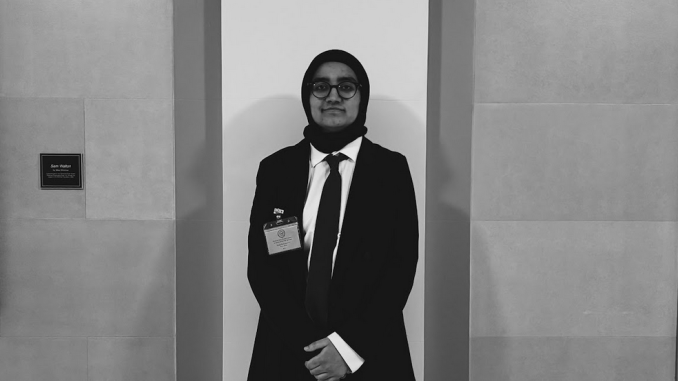
Sophia Rehman, a representative from the University of Tulsa (TU), presented the “Protect Political Speech Act” (TU-508). The bill passed the House in a vote of 53-10 and aims to protect free speech by addressing a person’s ability to criticize Israel without punishment. It does this by repealing the current definition of antisemitism that Oklahoma adopted in 2020. “I wrote the bill because when I saw that the legislature had passed this in March, I immediately saw it was to curb political speech. This has been ongoing for the last two years, starting on October 7. It’s a very controversial subject, and there’s been a lot of repression for those who want to criticize Israel.”
The definition Rehman is looking to repeal originates from Senate Bill 991, which passed the Oklahoma legislature in May 2025. The bill adopted a non-legally binding working definition of antisemitism that was established by the International Holocaust Remembrance Alliance. In simple terms, it means that Oklahoma officially adopted a general definition of antisemitism that cannot be used as an enforceable rule and does not create new laws or penalties for speech against Israel, however it helps in the legal process of combating antisemitism.
When does free speech become antisemitism?
Rehman strongly believes that individuals should be allowed to respectfully criticize political establishments without facing repression. She notes she is not advocating for a position to put Jewish people in danger, but to allow others to speak more freely about their opinions of Israel. Rehman states that it is acceptable to criticize a nation, but wrong to attack an individual because of their religion or ethnicity. “I’m not saying that we shouldn’t combat antisemitism. I’m just saying we should not conflate the two, because that would make Jewish people more in danger,” said Rehman.
The House’s opinion.
Representative Aidian Devore (Southeastern University) voted yes on this bill, stating he felt the current definition held by Oklahoma was unconstitutional to free speech. Devore cites House Bill 3967, which passed in 2020, and recognizes Israel as a significant trading partner; therefore, the law prohibits Oklahoma businesses from boycotting the nation.
For Devore, free speech becomes antisemitic when it incites violence against people. “It’s a very subjective clause. When we start getting into speech that incites violence, I think that’s where we hard draw a line drawn which is also often very subjective,” said Devore.
Lockhart, a three-star attorney from OSU, voted against repealing the definition because it would remove the existing definition and process for handling antisemitism without providing an alternative to address it. “What this does is pull it out and doesn’t give any definition. After that, it gives no course of action,” said Lockhart. This is the only reason he voted against the bill.
Lockhart draws the line when speech starts to “disrupt the daily proceedings of others…Every American is guaranteed the right to free speech. This is a fact. With that being said, there are certain restrictions that can be placed for the protection of others,” said Lockhart.