
Journalist: Luna Ghimire (ECU)
A student bill aimed at supporting local music venues and artists passed in the Oklahoma Intercollegiate Legislature with a strong 53-3 vote.
The bill, known as the “Main Street Music Act of 2026,” proposes tax rebates for music venues that pay local performers at least $100 per hour. In return, venues can receive back a percentage of the sales tax and mixed beverage tax they pay to the state.
The rebate is based on venue size. Smaller venues can receive up to 75%, medium-sized venues 50%, and larger venues 25%. The goal is to support smaller, local venues while also making sure artists are paid fairly for their work.
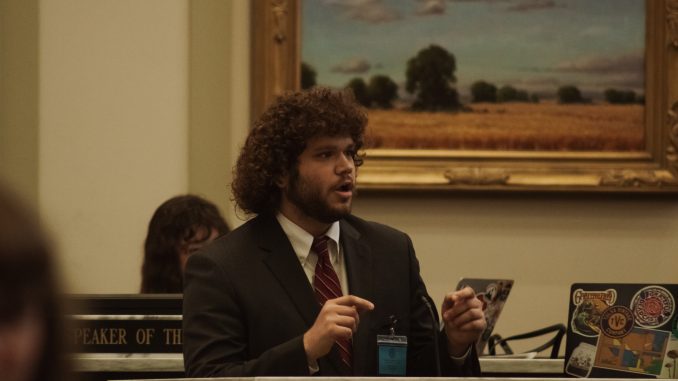
During the presentation, the author explained that many venues and musicians struggle financially. He said about 64% of music venues in Oklahoma would qualify under the bill, and many artists are currently underpaid.
“This bill will help local small, mom-and-pop live music venues,” he said. “It will ensure that artists are paid fairly and that music stays alive in Oklahoma.”
The bill includes an initial funding of $10 million, with about $500,000 per year after that. The author argued that this is only a very small portion of the state budget and that there are limits in place to control spending if needed.
Supporters also pointed out the economic impact. They explained that money spent on concerts often leads to more spending in nearby businesses like restaurants, parking, and other local services.
From what I observed, this bill stood out because it focused on both culture and the economy. It showed how supporting music can also support local businesses and communities. Watching the debate made me understand how policies can actually affect real people, especially small business owners and artists.
Overall, this experience made me feel more confident in understanding legislation. Seeing how ideas turn into actual bills helped me connect what we learn in class to real-world situations.