
Journalist: Jasmine Hornek (ORU)
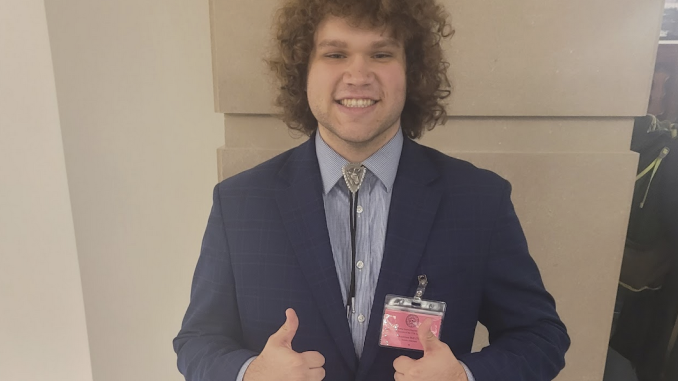
For many students at the Oklahoma Intercollegiate Legislature, policy debates provide an opportunity to confront real issues—some sweeping, others surprisingly small but equally impactful. For Representative Anderson Bell, a delegate from the University of Tulsa, one bill in particular stood out not for its scale, but for its unexpected relevance: Senate Bill How to Break Up with Your Goldfish.
Proposed by Representative Friesen of the Oklahoma State University delegation, this bill addresses a niche but growing ecological problem—the release of pet goldfish into Oklahoma waters, where they can become highly invasive.
Goldfish, commonly believed to remain small bowl-sized pets, can grow to enormous sizes once released, out-compete native species, and disrupt aquatic ecosystems. Many Oklahomans, unaware of these consequences, free unwanted goldfish into ponds, lakes, or creeks, contributing to an environmental issue the state increasingly struggles to control.
Bell admitted that the topic was new to him. “I had no idea how invasive goldfish were before this bill,” he said. “It is something I will think about in the future, I am sure.” According to Bell, the bill garnered a surprising amount of support.
“Basically, everyone was in favor of it,” Bell said. “It helps protect local ecosystems and ensures they are not thrown off balance. Honestly, there was not much real opposition.”
The bill would achieve this through a combination of restrictions, education, and penalties designed to reduce accidental ecological harm.
Under the proposal, individuals would be prohibited from releasing goldfish into any public waterway without explicit approval from the appropriate governing body. Even private ponds would be subject to regulation if they connect to public waters where goldfish could reasonably migrate.
Beyond restrictions, the bill emphasizes education over punishment. It directs the Oklahoma Department of Wildlife Conservation (ODWC) to create and distribute materials on responsible pet ownership, humane disposal options, and adoption or surrender programs for unwanted fish. Pet stores, veterinarians, and aquarium hobbyist groups would all play a role in helping prevent unintentional ecological damage.
While lighthearted in name, the “How to Break Up with Your Goldfish” Act highlights a larger truth: even small, seemingly harmless actions by ordinary people can have outsized impacts on Oklahoma’s environment. Moreover, students like Bell, it serves as a reminder of why OIL exists—to shed light on overlooked issues and provide young policymakers with an opportunity to debate real solutions.